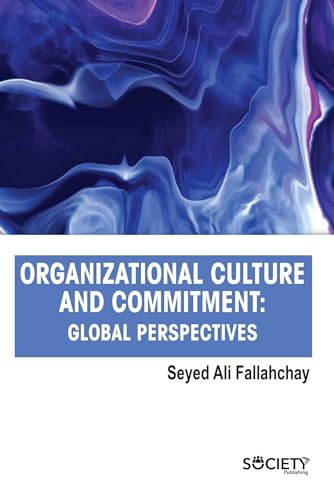
Organizational culture and commitment : global perspectives / Seyed Ali Fallahchay.
Material type: TextPublisher: Burlington, Ontario : Society Publishing, 2024Description: xx, 224 pages : illustrations ; 24 cmContent type:
- text
- unmediated
- volume
- 9781774698112
- 658.4 F19o 23
- HD58.7 .F355 2024
| Item type | Current library | Shelving location | Call number | Copy number | Status | Date due | Barcode | |
|---|---|---|---|---|---|---|---|---|
 Books |
Main Library | Circulation Section | CIR 658.4 F19o 2024 (Browse shelf(Opens below)) | 1-1 | Available | 032001 |
Includes bibliographical references and index.
An introduction to organizational culture -- Inter-organizational culture - linking relationship marketing with organizational behaviour -- Organizational culture and healthcare providers commitment -- Diagnosing and changing organizational culture -- The impact of organizational commitment -- Competing value leadership: creating value in organizations -- Multiple commitments in workplace: an integrative approach.
"The term 'Organizational Culture (OC)' refers to the standards and principles that make up a group and give it its distinctive character. These principles continue to guide the organizations' development and operations. Culture sits in the background of an organization. It consists of societal norms for behavior and thought. It has more to do with the organization's personality and traditions and practices. Itis the collection of traditions, values, policies, beliefs, and attitudes that constitute a pervasive context for everything we do and thinkin an organization. At its best, culture may help employees feel good about their company, but at its worst, it can demoralize them, leaving them feeling angry, dissatisfied, and even afraid. A company's culture is strong if it is shared by a sizable percentage of its members and is strongly ingrained in their minds. When it comes to factors like employee motivation and consequently productivity, an organization's culture has significant effects. It is crucial in relationships with various groups of people and organizations, including partners, regulators, suppliers, consultants, and customers. The organization's culture affects decisions and decision-making processes, as well as the formal and informal control mechanisms that are used. It does this by allowing or restricting communication channels"-- Back cover.
There are no comments on this title.