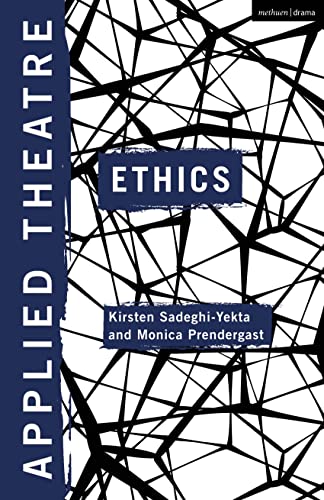
Applied theatre : ethics / edited by Kirsten Sadeghi-Yekta and Monica Prendergast.
Material type: TextSeries: Applied theatrePublisher: London ; New York : Methuen Drama, 2023Description: xv, 277 pages ; 22 cmContent type:
- text
- unmediated
- volume
- 9781350288706
- Ethics
- 23 792.01 Et373
- PN2039 .E878 2023
| Item type | Current library | Shelving location | Call number | Copy number | Status | Date due | Barcode | |
|---|---|---|---|---|---|---|---|---|
 Books |
Main Library | Circulation Section | CIR 792.01 Et373 2023 (Browse shelf(Opens below)) | 1-1 | Available | 032650 |
Includes bibliographical references and index.
Part 1. How we can be together -- Introduction: being together -- Indigenous perspective on ethics and theatre -- Ethical discourse in applied theatre: a historiographic and curricular literature review -- A dialogue with James Thompson: paper airplanes, good care, and working alongside each other -- Part 2. Examples of togetherness -- Toward a "first philosophy" of applied theatre: practice of freedom embedded in responsibility for the other -- For an ethic of critical generosity: facilitating productive discomfort in applied theatre praxis -- Off the record: can we just have a conversation? An ethics of acceptance approach for applied theatre practice and research -- "Dark night ends": the ethics of vulnerability in applied theatre -- Responsibility for the other: an ethic of care in applied theatre practice in Greek refugee camps -- "Standing in the trouble": tensions and ethics of engagement in utilizing applied theatre in the context of police training -- Ethics of precarity in applied theatre: a case study from Nigeria -- Research ethics as censorship in applied theatre -- Colonial adventurism in applied theatre: an ethical self-critique -- Locked down with ikigai: initial thoughts on the essential void.
"This volume explores what it means for applied theatre practice to be conducted in an ethical way and examines how this affects the work done with communities and participants. It considers how practitioners can effectively balance aesthetics and ethics in the process of creating performance, particularly with relatively inexperienced and often vulnerable groups of people who are being asked to both tell and stage their stories. While Part One offers an overview of critical debates and the editors' reflections on their own practice, Part Two presents a range of international case studies that explore how the theories and issues are worked out in a variety of diverse practices. The two sections bring together both theoretical and practical ways for theatre-makers to examine the ethics of their applied theatre projects. In Part One, readers are presented with a critical introduction to ethics in applied theatre practice, informed by the thinking of philosophers, scholarly literature on applied theatre, and the editors' own experience, as they consider the question - What is the good? For practitioners working in the field of applied theatre, it provides recommendations for community-based ethical approaches working with principles of voice, agency, collaboration, relationality and reciprocity. Part Two presents a range of international case studies that consider ethics from varying critical perspectives and contexts, including projects in Australia, Nigeria, Sri Lanka, Bangladesh, the United Kingdom, and Canada. Covering work with participants of many ages, from children to seniors, the case studies include indigenous perspectives on a language revitalization project with the Hul'q'umi'num' people of British Columbia; the work of a professional dance theatre company working with addicts and people in recovery; interactive drama used in an educational context in Nigeria, and applied theatre projects in situations of trauma with refugees on the Greek island of Lesbos, among others"-- Provided by publisher.
English.
There are no comments on this title.