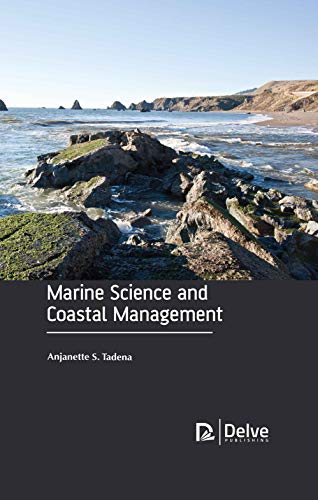
Marine science and coastal management / Anjanette S. Tadena.
Material type: TextPublisher: Oakville, Ontario : Delve Publishing, 2020Description: xxv, 292 pages : color illustrations ; 23 cmContent type:
- text
- unmediated
- volume
- 9781774072158
- 23 551.46 T121m
- HT391 .T334 2020
| Item type | Current library | Shelving location | Call number | Copy number | Status | Date due | Barcode | |
|---|---|---|---|---|---|---|---|---|
 Books |
Main Library | Filipiniana Section | FIL 551.46 T121m 2020 (Browse shelf(Opens below)) | 1-1 | Available | 030496 |
Includes bibliographical references and index.
Introduction to marine science -- Oceanic circulation -- Oceans-Physics and chemistry -- Pelagic environment -- Basics of coastal zone management -- Coastal pressures -- Methodology -- Effect-load-sensitivity -- Representation of nutrients -- Management methods -- Monitoring coastal environments using GIS and RS -- GIS for estuaries -- Marine flora and fauna -- Mangrove productivity and organic matter -- Management information.
"This book is intended to be a textbook for practitioners in the areas of marine science and integrated coastal zone management (ICZM). It is clearly mentioned in the environmental point of view. This book can serve as manual and may be used as reference source for, which marine science and ICZM are study areas. This book explains the strategies, which are required for effective management of the coastal zone, and it explains the working tools along with the reliable information. This book can serve as a guidebook for environmental conservation. It describes the nature pragmatically. It is written in the human point of view and can influence many. It can act on the goal required for management technology and resource planning. In a world, where there is rapid population growth there will be limiting natural resources, Every country should plan for their good economic growth, and they must maintain the environmental management and resource conservation in balance.
In the coastal areas of the world, there exists a high population density, which is linked with the urban growth, which may be linked with the urban growth and industrialization. These advancements pose a major threat to the biodiversity and natural resources. The effects of unregulated development can cause destabilizing ecosystems. They may also result in the change of land use patterns, and as a result, many of the communities can be susceptible to sea storms. This will create demands on the ecological resources of the world, which are otherwise not sustainable. This situation can get worst. The present coastal population can be doubled in coming decades, and the resources are becoming limited. The tourism expansion and urbanization can lead to the pressure on the water resources, and there will be irreversible changes in the coastal environments. Increase of solid waste, liquid, and gaseous waste can compromise the future of wetland ecosystems, coastal, and marine ecosystems. The major resource systems present in the coasts may not provide equal land. The coastal ecosystems and some of the coastal habitats like mangrove forests and coral reed can be distinguished. They can be extremely productive and are full of renewable resources. They are economic goods and services, mangrove forest products, tourist income, and protein food. These resource systems must be conserved immediately. The sustainable use can be a best alternative for resource depletion, which can answer the excessive exploitation." -- Back cover
There are no comments on this title.